
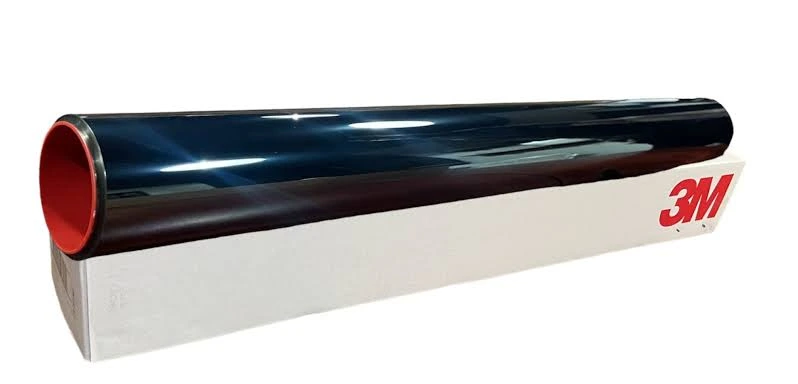
If you’ve started shopping for car window tint, one name keeps coming up: 3M auto film. It’s one of the most searched and most trusted films in the world — but with so many series, price points, and marketing claims out there, it’s easy to feel lost.
This guide breaks it all down in plain language. By the end, you’ll understand exactly what 3M auto film is, which range fits your needs, what real performance looks like, and how to make sure you’re paying for the genuine article — not a cheap knock-off wearing a 3M label.
WHAT IS 3M AUTO FILM?
3M auto film is a high-performance window tint applied to the inside surface of your car’s glass. It’s made up of multiple ultra-thin layers engineered to block heat, filter out harmful UV rays, reduce glare, and add privacy — all while staying thinner than a sheet of paper.
What makes 3M different from generic tint is the technology packed into those layers. Instead of relying only on dye (which fades) or metal (which blocks signals), 3M’s premium films use nano-ceramic particles and multilayer optical technology to reject heat efficiently. 3M actually invented much of the window film industry and holds many of its foundational patents — which is part of why the name carries so much weight.
WHY CHOOSE 3M AUTO FILM OVER CHEAPER ALTERNATIVES?
Tint is one of those things where the price difference between “cheap” and “quality” pays for itself over the life of the film. Here’s what quality 3M auto film delivers:
Real heat rejection. The sun’s heat you actually feel comes largely from infrared radiation. Premium 3M films are built to reject a large share of that infrared heat, keeping your cabin noticeably cooler and easing the load on your air-conditioning.
Up to 99% UV protection. 3M films block almost all harmful UV rays, protecting your skin on long drives and stopping your dashboard and seats from fading and cracking.
Glare reduction. Less squinting into harsh sunlight and fewer distracting reflections means safer, more comfortable driving.
Colour that lasts. Cheap dyed films famously turn purple and bubble within a year or two. 3M’s films are engineered to hold their colour and clarity for years, backed by a manufacturer warranty.
Signal-friendly options. Non-metallized 3M films won’t interfere with your GPS, mobile signal, or toll/RFID systems.
The 3M Auto Film Range Explained
3M offers several tiers so you can match performance to budget. Here’s how the popular ranges compare:
3M Crystalline Series — The Flagship
The top of the line. Crystalline is a non-metallized, multilayer optical film — over 200 layers stacked thinner than a sticky note. Its party trick is rejecting more heat than many darker films while staying light and clear. Perfect if you want maximum heat rejection without a blacked-out look, and it never interferes with electronic signals.
3M Ceramic IR Series — The Sweet Spot
Ceramic-based film focused on infrared heat rejection at a more accessible price than Crystalline. Clean, natural appearance and excellent everyday performance. This is the range many drivers land on when balancing cost and comfort.
3M Color Stable Series — Best Value
A nano-carbon dyed film whose big selling point is that it won’t turn purple or fade. It delivers a rich, consistent black finish and dependable protection — a smart pick for drivers who want a classic dark look that lasts without paying flagship prices.
3M Entry / Black Series — Budget-Friendly
More affordable films that still carry 3M quality and warranty. Great for rear windows or drivers who mainly want solid UV protection and glare control.
HOW TO READ FILM PERFORMANCE NUMBERS
When comparing films, you’ll see a few key specs. Here’s what they actually mean:
| Spec | What It Measures | What to Look For |
|---|---|---|
| VLT (Visible Light Transmission) | How much light passes through — higher = lighter | Match to your legal limits |
| IRR (Infrared Rejection) | How much heat-carrying infrared is blocked | Higher = cooler cabin |
| UV Rejection | How much UV is blocked | Aim for ~99% |
| TSER (Total Solar Energy Rejected) | The overall heat-blocking score | The single best number for "how cool will it feel" |
A common mistake is assuming darker automatically means cooler. It doesn’t. A light Crystalline film can outperform a dark cheap film on heat rejection — always compare the TSER and IRR, not just how dark it looks.
WHAT AFFECTS THE PRICE OF 3M AUTO FILM?
There’s no single price for a 3M tint job, and quotes vary for good reasons:
- Which series you choose (Crystalline sits at the top, entry films at the bottom)
- How many windows you’re doing and your car’s size and shape (larger or more curved glass takes more film and labour)
- Whether it’s a full job or just the front/rear
- The installer’s expertise and included warranty
Think of film as a multi-year investment rather than a one-off cost. A premium film that keeps you cooler and lasts a decade often works out cheaper per year than replacing a faded budget film twice.
HOW TO SPOT GENUINE 3M AUTO FILM
Counterfeit and mislabelled film is a real problem, so protect yourself:
- Buy from an authorised 3M dealer — only they can issue a valid 3M warranty.
- Ask for the warranty card and authenticity documentation that comes with genuine film.
- Request a VLT reading taken with a proper meter after installation, and keep the spec sheet and receipt.
- Inspect the workmanship — no bubbles, no lifting edges, clean cuts around the glass.
Question suspiciously low prices — if “Crystalline” is being offered far below market rate, be sceptical.
CARING FOR YOUR NEW TINT
After installation, your film needs a short curing period — typically a few days to a couple of weeks depending on weather. During this time you might notice slight haze or small water pockets; that’s completely normal and clears as the film bonds. Avoid rolling your windows down for the first few days, and clean the film later with a soft cloth and ammonia-free cleaner to keep it looking new.
FREQUENTLY ASKED QUESTIONS ABOUT 3M AUTO FILM
Is 3M auto film worth the money?
For most drivers, yes. The combination of genuine heat rejection, near-total UV protection, lasting colour, and a manufacturer warranty makes it a strong long-term value compared to films that fade or bubble.
Which 3M film is best for heat rejection?
The 3M Crystalline Series offers the highest heat rejection in the lineup, followed closely by the Ceramic IR Series. Compare the TSER rating to judge real-world cooling.
Does 3M film make windows very dark?
Not necessarily. 3M offers a wide range of shades (VLT levels). Films like Crystalline can reject serious heat while staying light and clear, so you don’t have to go dark to stay cool.
Will 3M film affect my GPS, phone, or RFID toll tag?
Non-metallized films — including Crystalline and the ceramic ranges — won’t interfere with electronic signals. This is one reason they’re so popular.
How long does 3M auto film last?
With proper installation and care, quality 3M film can last many years — often a decade or more — and comes backed by a manufacturer warranty.
Can I install 3M film myself?
It’s strongly recommended to use an authorised professional installer. Proper installation is what unlocks the warranty and ensures a clean, bubble-free, long-lasting result.
3M auto film earns its reputation. Whether you go for the flagship Crystalline, the balanced Ceramic IR, or the great-value Color Stable, you’re getting technology that genuinely improves your daily drive — cooler cabins, protected skin, less glare, and a look that lasts.
The two decisions that matter most: pick the series that matches your priorities (heat, budget, or looks), and always buy from an authorised dealer so you know your film — and your warranty — are the real thing.